







When you specify a metallic finish, what you are making impacts the production questions you need to ask. Can you print metallic on a premium label using the same equipment you would choose for an industrial panel or branded component?
Your decision starts with the intended appearance, how the finish is produced and whether the process fits your material and production requirements.
How to Tell True Metallic Printing From a Simulated Look
For a genuinely metallic finish, you need reflective pigments or materials that produce shine as light strikes the surface. Conventional cyan, magenta, yellow and black (CMYK) printing can approximate a gold or silver shade.
Standard process inks cannot replicate true metallic gloss because they lack the aluminum or other metallic pigments used in metallic inks. CMYK remains the industry standard for photographic and image-heavy commercial printing, including catalogs and magazines.
When your packaging specification also calls for a metallic sheen, you need a process that provides the reflective element. For approval, ask your provider for a physical sample on your intended material and examine it under the lighting your product will encounter. A conventional color proof can help you assess the artwork, while a representative metallic sample lets you evaluate the finish itself.
The Technologies Behind True Metallic Printing
When you compare metallic production methods, two broad material categories provide a useful starting point. Pigment-based processes use metallic particles in inks or toners, while foil-based methods supply a reflective metallic layer.
Specialty Metallic Toners and Digital Presses
With a suitably configured production-grade digital press, you can print metallic gold or silver using dedicated specialty toner stations. Supported systems can layer these toners above or below CMYK to create additional metallic appearances on compatible media. Research categorizes metallic processes according to the material, distinguishing pigment-based methods from foil-based techniques.
For your equipment shortlist, confirm both support for metallic toner and the available controls, since adjustable toner density depends on the press. Specialty digital production may suit shorter runs with changing artwork or personalized designs. Ask your provider to demonstrate the proposed toner combination on your selected stock before approving production.
Foil Stamping and Metallic Substrates
For traditional hot foil stamping, a heated die and pressure transfer a reflective layer onto your printed material. This mechanical finishing process requires tooling, which you should include when comparing production costs. For repeated premium packaging designs, ask whether the planned volume makes foil tooling practical.
With a pre-metalized substrate, your material already carries the reflective surface before printing begins. Your artwork can leave selected areas exposed or use compatible printed layers to shape the appearance. With metalized stock, confirm that your provider supports the material and proposed finishing sequence.
Pantone Spot Colors and Premixed Metallics
For brand colors that must remain consistent across production runs, premixed metallic spot inks provide standardized formulations containing reflective pigments. You can specify these inks by their color references, while specialty digital toners remain specific to the supported press system.
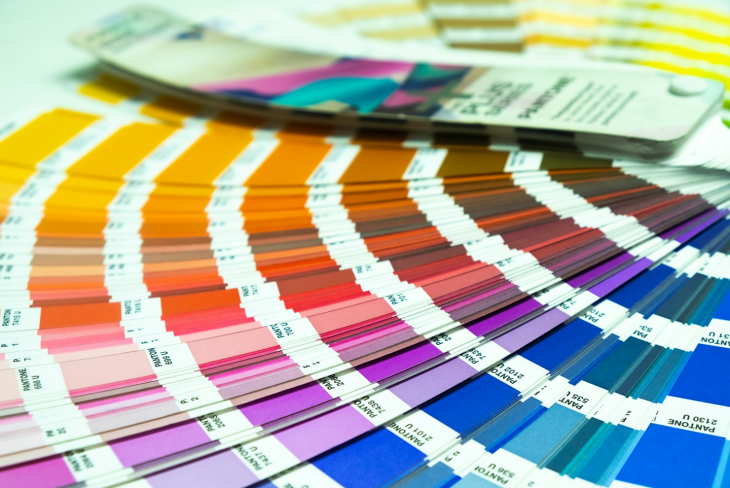
References such as Pantone Gold 8641 C and Silver 877 C help you communicate the intended finish with your printer. Metallic references are part of a broader library of approximately 2,300 standardized spot colors, which also includes nonmetallic colors.
How Leading Print Technology Providers Deliver True Metallic Results
FUJIFILM Business Innovation Division provides examples through the Revoria Press™ PC1120 and Revoria Press™ SC285S. The PC1120 is a six-color press that can run two specialty toners simultaneously, while the SC285S integrates one specialty toner alongside standard CMYK for metallic applications.
According to Fujifilm, the Revoria Press™ PC1120 offers full-color output at up to 2,400 x 2,400 dots per inch (dpi) and production speeds up to 120 pages per minute. You can use model-specific specifications to frame questions about fine artwork reproduction and the capacity available for your expected order volume. You can print metallic effects on supported paper stocks, with the press accommodating a range of weights and sheet sizes.
Ask for confirmation of your exact stock, since a broad media specification still requires matching the equipment to your particular material. Specialty consumables and additional finishing may increase your costs compared with standard CMYK production, so request an itemized quote alongside metallic samples. If your design also includes foil, ask how that separate finishing step fits the workflow and total operating cost.
Matching the Printing Process to Your Product
Before requesting equipment recommendations, define your finished material and the appearance you want to achieve.
Consider a hypothetical launch requiring both reflective paper labels and branded metal control panels. For the labels, you might evaluate metallic toner on compatible stock or a foil finish. For the panels, your specification would concern graphics applied directly to an existing metal surface, which would require separate confirmation of the provider's material-handling and printing capabilities.
Your artwork requirements and order quantities can help narrow that choice further. For frequently changing label designs, evaluate specialty digital production, then compare foil-stamping costs for recurring packaging orders that reuse the same tooling.
As you compare processes, consider which applications print providers commonly embellish. Keypoint Intelligence identified the most common applications for embellishments in its survey. Business cards led the survey at 59%. Postcards followed at 44%, brochures and flyers at 41%, and direct mail at 37%.
For your own application, use these findings as context and compare quotes for the same material, finish and production quantity.
Frequently Asked Questions
As you narrow your options, equipment requirements and cost remain central to the decision. These common questions connect those considerations to the available production methods.
Can you print metallic on a standard office printer, or does it require specialty equipment?
A standard office printer using conventional CMYK can simulate a metallic shade without producing true metallic reflectivity. For a reflective result, you need a suitable specialty toner press, a metallic spot-ink process or a foil-finishing method.
Does metallic printing cost more than standard CMYK printing?
You should generally expect additional costs for metallic printing, with the amount depending on the method you choose. Compare specialty consumables and operating costs alongside setup, foil dies and finishing requirements when evaluating quotes.
Choosing the Printer That Brings Your Metallic Vision to Life
When you ask a provider whether you can print metallic for your product, include the intended reflective quality, material and production volume in the discussion. Compare demonstrated samples and total production costs to identify a process suited to your application.
Your finished product gives you the clearest starting point for choosing the equipment and provider.