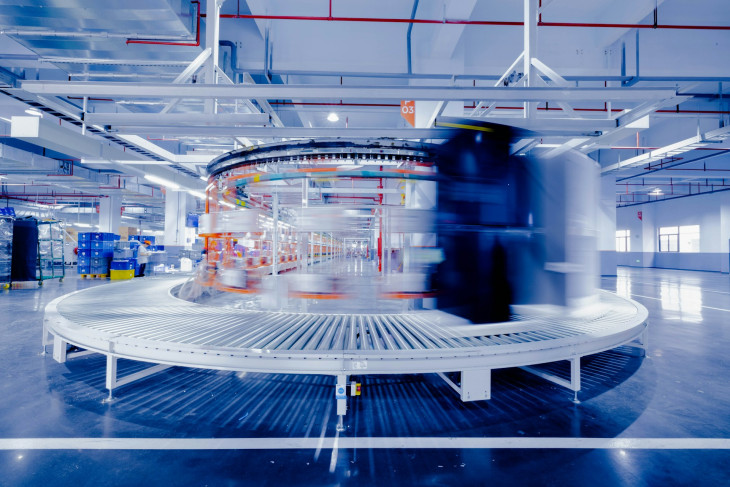











Investment in warehouse automation has moved from experimentation to a genuine capital priority for manufacturers modernizing their material flow. Roughly 4.7 million commercial robots are expected to be installed across more than 50,000 warehouses and manufacturing facilities worldwide by the end of 2026, according to recent warehouse automation research, and the automation market is on pace to grow at a compound annual rate near 14-to-18-percent through the decade, per Mordor Intelligence's market sizing. Autonomous mobile robots, goods-to-person systems, vision-based receiving, and voice-directed picking are no longer pilots confined to a handful of flagship facilities, as engineering and operations teams put them to work across production and distribution floors alike.
Yet for many manufacturers, the biggest obstacle to scaling automation is no longer the automation technology itself. It is the software architecture connecting those systems to the warehouse operation.
The business case for this spending is well documented. Less discussed, and arguably more consequential for whether it pays off, is what happens after the purchase order is signed: the work of getting new automation to actually communicate with the warehouse management system running the manufacturing operation.
Why the Integration Bill Can Exceed the Hardware Bill
A PwC survey of more than 600 operations and supply chain executives, highlighted in reporting on the warehouse robotics integration bottleneck, found that 92 percent said their technology investments had not fully met expectations, and nearly half pointed to integration complexity, not hardware cost or AI performance, as the primary reason. Separate research from Mordor Intelligence found that integration projects tied to automation deployments routinely overrun budgets by roughly 30 percent and timelines by as much as a year, eroding the return that justified the projects in the first place.
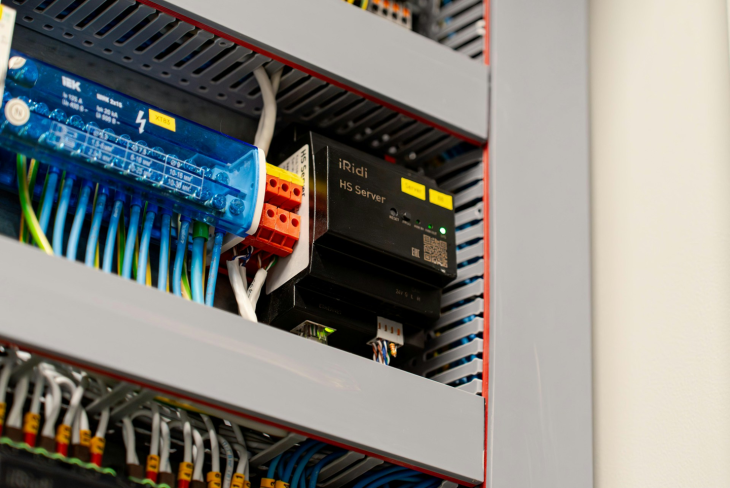
The mechanics are not mysterious. Many enterprise WMS platforms were architected when the primary integration requirements were a connection to an ERP and, perhaps, a transportation management system. That architecture was never built to absorb a fast-growing and scaling list of automation vendors, sensor networks, and real-time data feeds. Each new automation partner now becomes its own custom engineering project, built point-to-point, with its own data mappings, failure modes, and maintenance burden. As these connections accumulate, the system grows more fragile rather than more capable. A change on one side can quietly break another, and troubleshooting a fulfillment problem increasingly means tracing a fault across disconnected point solutions rather than one system of record.
This is why so many operators discover, often mid-project, that the systems integration work behind a robotics deployment costs more than the automation hardware itself.
What a Modern Integration Architecture Looks Like
The alternative gaining traction is a shift from point-to-point wiring toward a common orchestration layer, such as a robotics hub or automation control tower approach. Rather than reprogramming and re-coding the WMS every time a new automation system, sensor, or vendor is added, the goal is a set of standard, documented APIs that any vendor can map to once, or configure and “dial up” as needed. New hardware and software then become plug-in participants rather than the trigger for another integration project.
This architectural shift represents a broader change in how manufacturers should think about warehouse software. The WMS is no longer simply managing inventory movement; it is becoming the coordination layer between people, machines, and intelligent systems operating in real time across the warehouse floor and distribution network.
Increasingly, the technical foundation for this kind of architecture is cloud native and containerized, with advanced platforms using a microservices architecture to orchestrate independent services that can be deployed, scaled, and updated without taking the whole system down. The practical benefit has little to do with the underlying technology name and everything to do with the outcome: a new integration becomes a matter of weeks rather than a multi-quarter engineering effort, and a delay in one service does not cascade into a warehouse-wide outage.
Questions Worth Asking Before the Next Automation Investment
Engineering and operations leaders evaluating an automation project, or a WMS platform itself, are increasingly well-served by questions that go beyond throughput and price-per-pick.
How many separate, custom integrations does the current architecture support, and who maintains them? What happens to those integrations when the WMS is upgraded or patched? Can a new automation vendor be onboarded through a documented API without a new statement of work? How is data consistency maintained across the WMS, the robotics, and the order management system when a line-side replenishment assignment changes mid shift? What is the actual, fully-loaded integration cost, not just the license fee, tied to the last automation project completed? Perhaps most importantly: does the platform make automation easier to adopt over time, or does every new capability create another layer of technical debt?
The answers tend to reveal whether an organization is buying automation or quietly buying a future integration liability.
Integration Is Quietly Becoming a Selection Criterion
Industry research compiled by Material Handling Industry (MHI) shows 83 percent of supply chain leaders expect to adopt robotics and automation within five years, and 45 percent are actively planning new automation investments. Additionally, Gartner projects that by 2030, half of new warehouses in developed markets will be designed as robot centric, human optional facilities. That vision underscores where warehouse design is heading but realizing it depends on organizations being able to integrate automation without introducing excessive complexity into existing operations. That gap is starting to reshape how platforms get chosen. Integration architecture, once a detail buried in an RFP appendix, is emerging as a deciding factor in WMS selection alongside cost and core functionality. Operators who have lived through one expensive, fragile integration are less willing to repeat it, and vendors are responding by rebuilding around open APIs and microservices-based architectures rather than monolithic, tightly coupled code.
The organizations most likely to capture the full return on their automation spending will not necessarily be the ones with the most robots on the floor. They will be the ones whose software was built to let those robots, and whatever comes after them, plug in without a fight.

About The Author: Dylan McKeever is the Vice President of Professional Services at Logistics Reply, the Reply Group company specializing in supply chain execution software. With more than a decade of experience implementing warehouse management solutions, he has helped organizations across manufacturing, wholesale distribution, retail, e-commerce, and third-party logistics successfully deploy and optimize operations ranging from standalone warehouse facilities to large-scale enterprise distribution networks. For more information, please visit www.logistics-reply.com.